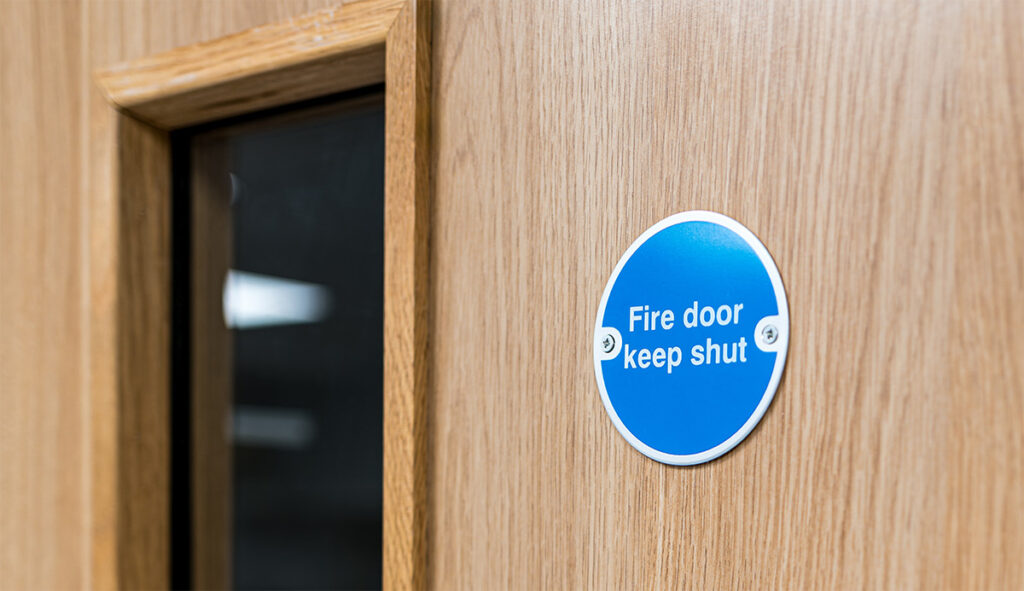
Post‑Grenfell legislation and a heavier inspection regime have shifted the UK fire door market from a new‑build focus to sustained replacement (RMI) demand.
The total fire and safety doors market was around £714m in 2025, with fire doors alone forecast at about £317m in 2026. For contractors, installers and distributors this is a structural opportunity: many doors failing compliance checks translate into repeatable, higher‑value work.
Why the UK Fire Safety Doors Market is Ripe Now
Regulatory pressure and traceability
The Building Safety Act, strengthened fire‑safety regulations and the Golden Thread requirement mean duty‑holders must evidence product performance and maintenance. Inspectors are looking for certified products and chain‑of‑custody documentation – and frequently finding gaps.
Certification and failure rates
Industry research shows only about 54% of responsible parties reported third‑party certification for their fire doors. That leaves a large stock of doors vulnerable to failure during inspections, and therefore candidates for remediation or replacement.
Doorsets as the preferred solution
Pre‑hung fire doorsets now account for an estimated 80–90% of annual installations. Doorsets reduce on‑site labour, simplify certification records and cut install time, making them the go‑to option for landlords and social housing managers seeking low‑risk compliance fixes.
Where the Commercial Value Lies
Larger, faster jobs: Failed inspections rarely result in a single screw‑fix. Common failure causes (incorrect intumescent seals, wrong gaps, inappropriate hardware or missing self‑closers) often require a full doorset swap — higher ticket, predictable labour and faster turnaround.
High‑margin components: Intumescent strips, certified closers, compliant locks, vision panels and signage are central to bringing a door back into compliance; collectively they represent a significant share of the seals, closers and fittings market.
Service and inspection prevalence: The increase in inspection activity has elevated recurring maintenance and verification as an ongoing part of asset management; remediation follow‑ups and periodic checks feature increasingly in client procurement discussions.
Broader Market Implications
The shift towards remediation is changing the product and distribution mix. Fire doors remain the largest single sector by value, but the market dynamics favour complete doorsets and certified systems that can be traced through manufacture, supply and installation. Imports continue to play a role in supply, particularly for wooden doors and hardware, recent trade data show volatility in import values that can affect lead times and pricing.
Regulatory and standards developments are also key context. The gradual transition from legacy national standards to European harmonised tests (and the emergence of schemes such as Q‑Mark for timber doors) is influencing procurement and specification. Meanwhile, amendments to Approved Document B and new schemes introduced since 2022 continue to sharpen attention on documentation, third‑party certification and installation competence.
End‑user demand is uneven across sectors. Social and affordable housing, where duty‑holders face intense regulatory scrutiny, accounts for a disproportionate share of remediation activity. Multi‑residential buildings, student accommodation and certain public sector premises remain focal points for compliance work. Conversely, sectors with slower construction growth, such as parts of retail, are less active in driving new‑build demand but still generate RMI work through refurbishments.
Outlook for the Fire Safety Doors Market
The structural drivers behind the replacement market look set to persist through the remainder of the decade. Growth projections for the overall fire and safety doors market point to continued expansion to 2030, underpinned in part by remediation and replacement activity stimulated by inspections and legislative change. For those tracking the sector, the near‑term picture is one of steady demand for certified doorsets, compliant hardware and verifiable product records rather than one‑off new‑build sales.
If you’d like the detailed market figures, supplier analysis and forecast tables referenced in this summary, the full Fire and Safety Doors Report UK 2026-2030 contains the supporting data and methodology.